What Is Compound Interest and How Does It Work?
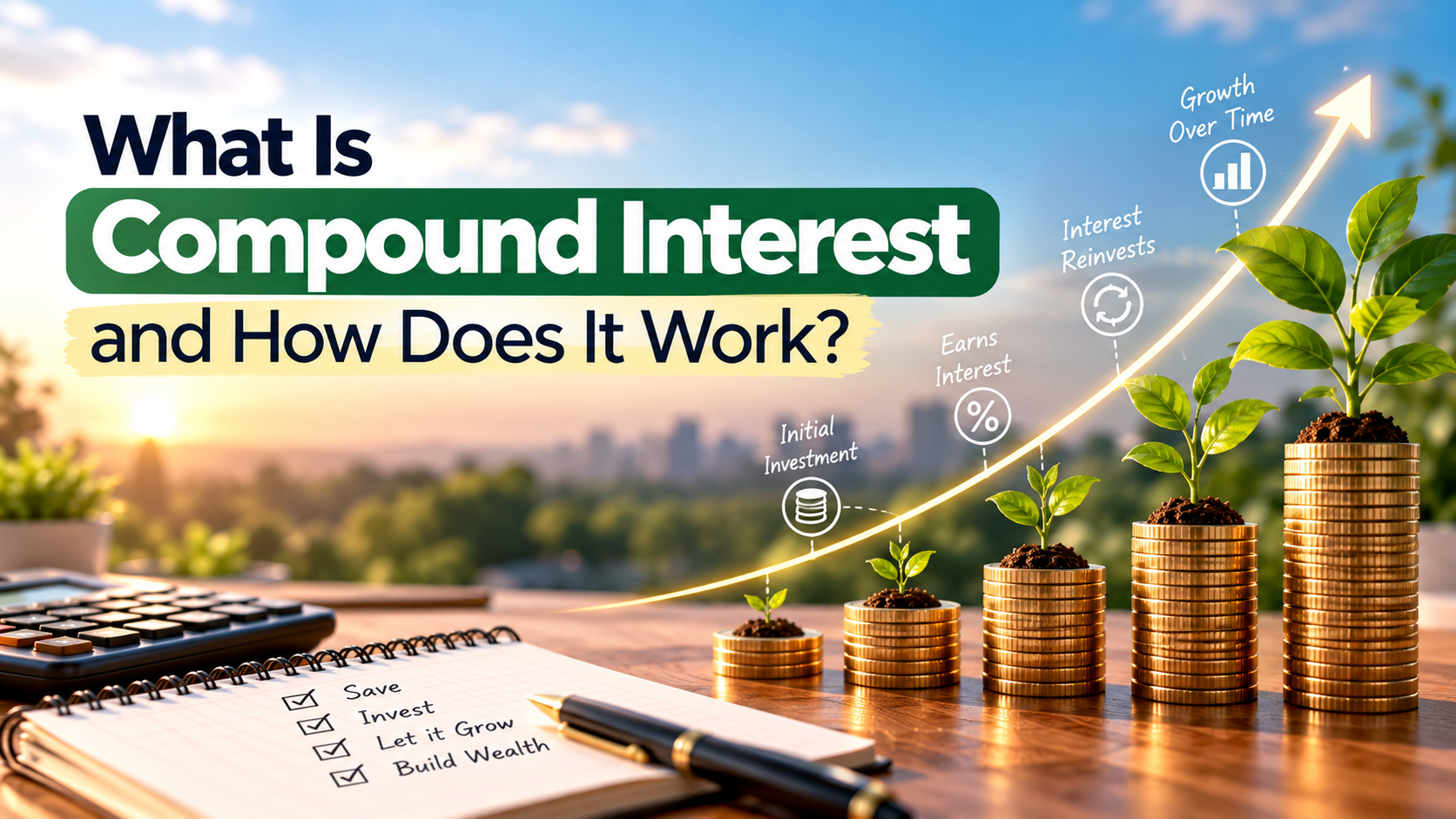
What Is Compound Interest and How Does It Work?
Compound interest is an important financial concept that can influence how your savings and investments grow over time.
Unlike simple interest, which is calculated only on the original principal, compound interest is calculated on the principal and previously accumulated interest.
This means that, when interest is added to your balance and earns further interest, your money can grow at an accelerating rate.
What Is Compound Interest?
Compound interest is interest calculated on both the original amount invested or deposited and the interest accumulated during previous periods.
For example, suppose you deposit ₹10,000 in an account that earns 10% annual interest, compounded annually.
After the first year, your balance becomes ₹11,000.
During the second year, interest is calculated on ₹11,000 rather than just the original ₹10,000.
Your balance would become ₹12,100 after the second year, assuming the same rate and no deposits or withdrawals.
This illustrates how compounding works.
Actual interest rates, taxes, fees, and compounding terms vary by financial product.
Simple Interest vs. Compound Interest
The two methods calculate interest differently.
Simple interest formula:
Simple Interest = Principal × Annual Interest Rate × Time
Compound interest formula:
A = P × (1 + r/n)^(nt)
Where:
A = Final amount.
P = Initial principal.
r = Annual interest rate expressed as a decimal.
n = Number of compounding periods per year.
t = Number of years.
Compound interest includes accumulated interest in future calculations, whereas simple interest is based on the original principal.
Example: How ₹10,000 Can Grow
Suppose you invest ₹10,000 at an assumed annual interest rate of 10%, compounded annually.
Year | Starting Balance | Interest Earned | Ending Balance |
|---|---|---|---|
1 | ₹10,000 | ₹1,000 | ₹11,000 |
2 | ₹11,000 | ₹1,100 | ₹12,100 |
3 | ₹12,100 | ₹1,210 | ₹13,310 |
4 | ₹13,310 | ₹1,331 | ₹14,641 |
5 | ₹14,641 | ₹1,464.10 | ₹16,105.10 |
After five years, the balance would grow to approximately ₹16,105.
The example assumes a constant rate and excludes taxes, fees, and inflation. It illustrates the mathematics of compounding rather than a guaranteed investment return.
Why Does Time Matter?
Compounding becomes more noticeable over longer periods because accumulated interest has more time to earn additional interest.
Starting early can give your money more time to grow.
For example, two individuals may invest the same amount but begin at different ages. If their investments earn identical rates and have the same fees and other conditions, the person who invests earlier generally has more time for compounding to work.
However, investment returns are uncertain, and actual results can differ substantially from projections.
How Can You Benefit From Compounding?
Consider these general practices:
Start early: Beginning sooner gives your savings or investments more time to accumulate returns.
Contribute regularly: Additional deposits can increase the amount available to earn interest or investment returns.
Reinvest earnings: Where appropriate, reinvesting interest or distributions can help compound growth.
Understand the product: Check interest rates, compounding frequency, fees, taxes, withdrawal restrictions, and investment risks.
Stay consistent: A long-term plan can help you avoid making financial decisions based solely on short-term market movements.
Conclusion
Compound interest helps explain how money can grow when earnings are added to the balance and generate further earnings.
Understanding compounding can help you evaluate savings products, investment projections, and long-term financial goals.