How to Create a Monthly Budget That Works
How to Create a Monthly Budget That Works
A monthly budget is one of the simplest tools for managing personal finances.
It helps you understand where your money goes, plan upcoming expenses, and allocate funds toward important financial goals.
A budget does not have to be complicated. Even a basic spreadsheet or budgeting application can help you organize your finances.
Step 1: Calculate Your Monthly Income
Start by identifying how much money you receive each month.
For salaried individuals, use take-home income rather than gross salary when preparing a practical spending budget.
If your income varies, consider using a conservative estimate based on your usual earnings.
Include other reliable income sources where appropriate.
Step 2: Track Your Expenses
Review your bank statements, payment records, and receipts to understand your spending.
Group expenses into categories such as:
Housing and rent.
Groceries and household supplies.
Transportation.
Utilities.
Education.
Insurance.
Loan repayments.
Entertainment.
Shopping.
Savings and investments.
This exercise helps reveal where your money is going.
Step 3: Separate Needs and Wants
Essential expenses are those required to maintain your basic lifestyle and meet important obligations.
Examples include rent, groceries, utilities, and necessary transportation.
Wants are discretionary expenses that can often be adjusted, such as entertainment, nonessential shopping, and certain subscriptions.
The distinction is not always absolute, so classify expenses according to your circumstances.
Step 4: Choose a Budgeting Method
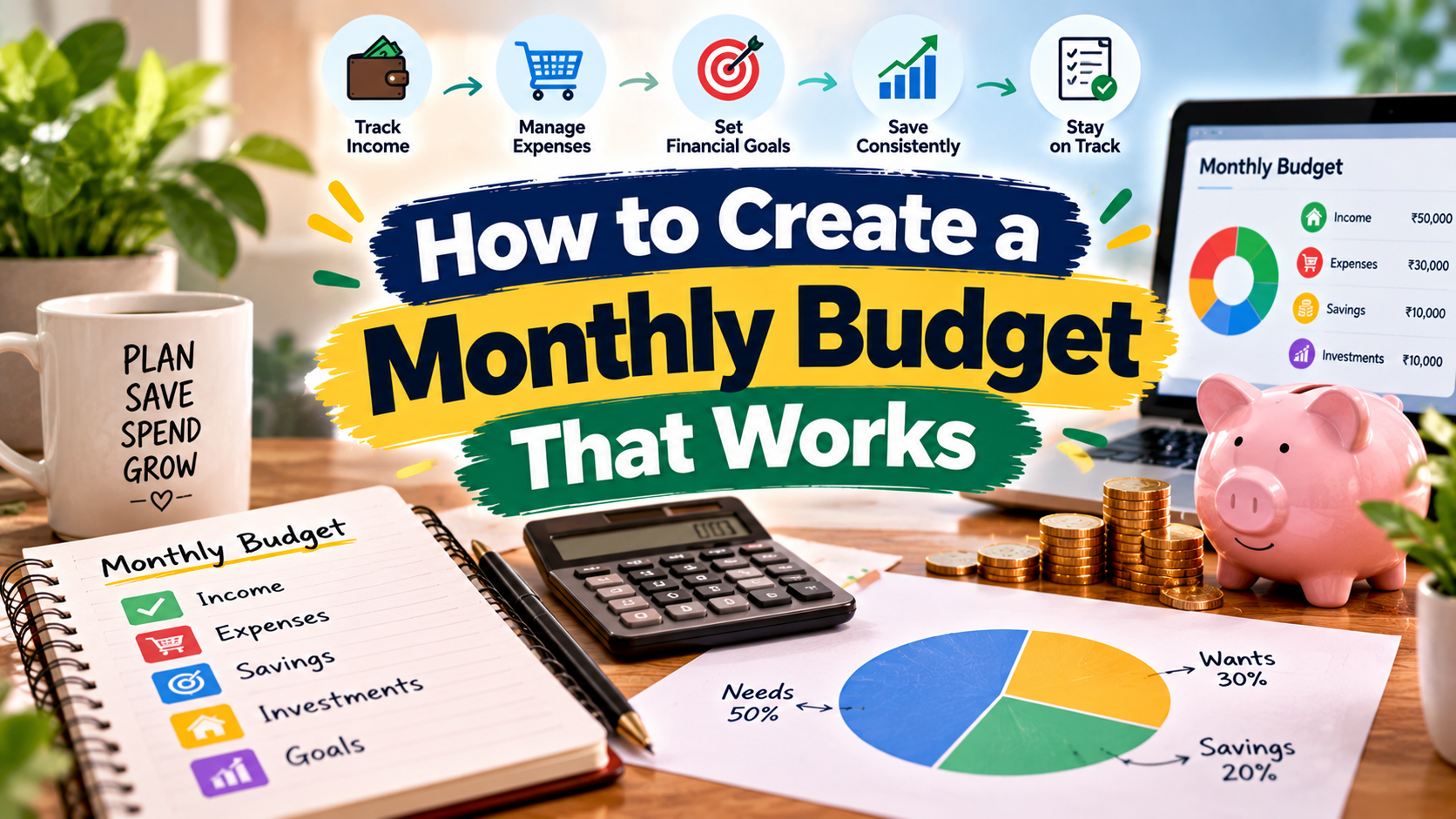
One popular approach is the 50/30/20 rule.
Under this method, take-home income is allocated approximately as follows:
50% toward needs.
30% toward wants.
20% toward savings and debt repayment.
Suppose your monthly take-home income is ₹50,000.
Category | Percentage | Amount |
|---|---|---|
Needs | 50% | ₹25,000 |
Wants | 30% | ₹15,000 |
Savings and debt repayment | 20% | ₹10,000 |
Total | 100% | ₹50,000 |
These allocations are illustrative rather than mandatory. If you have high housing costs, substantial debt, or aggressive savings goals, another allocation may be more appropriate.
Step 5: Set Financial Priorities
Decide which financial objectives matter most.
Your priorities may include building an emergency fund, repaying expensive debt, saving for education, or investing for retirement.
Assign realistic amounts to these objectives instead of saving only whatever remains at the end of the month.
Step 6: Review Your Budget Every Month
Compare planned expenses with actual spending.
If you consistently overspend in one category, adjust your budget or spending habits.
Unexpected expenses should also be considered when reviewing your plan.
A budget should reflect your real financial situation rather than an idealized version of it.
Common Budgeting Mistakes
Avoid these common problems:
Setting unrealistic limits: Budgets that are too restrictive can be difficult to maintain.
Ignoring small expenses: Frequent small purchases can add up over time.
Forgetting annual payments: Insurance premiums, school fees, and annual subscriptions should be planned for.
Not accounting for emergencies: Unexpected costs can disrupt an otherwise reasonable budget.
Failing to review spending: A budget becomes less useful when it no longer reflects your circumstances.
Conclusion
A practical budget helps you take control of your income and expenses.
By tracking spending, setting priorities, and reviewing your finances regularly, you can make progress toward your financial goals while maintaining flexibility.
Disclaimer: This article provides general financial education and is not personalized financial advice.