How to Build an Emergency Fund Step by Step
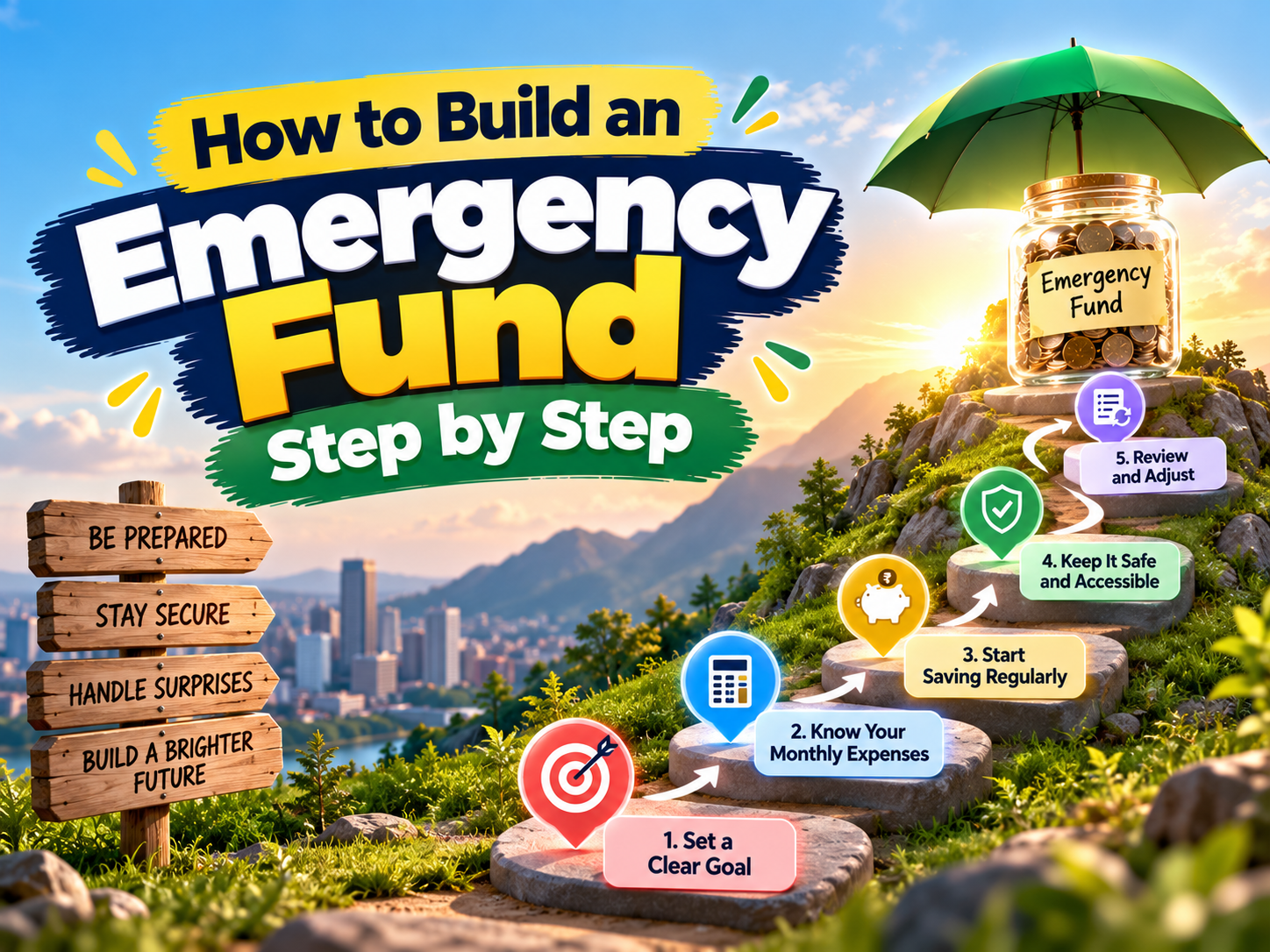
How to Build an Emergency Fund Step by Step
Unexpected expenses can arise even when you plan your finances carefully.
A medical expense, urgent home repair, or temporary loss of income can put pressure on your monthly budget.
An emergency fund helps cover these unexpected costs without relying entirely on credit cards, personal loans, or long-term investments.
What Is an Emergency Fund?
An emergency fund is money set aside for unexpected and necessary expenses.
It is intended to protect your financial stability rather than generate the highest possible investment return.
Examples of situations in which an emergency fund may help include:
Temporary loss of employment.
Unexpected essential medical costs.
Urgent vehicle repairs.
Necessary home repairs.
Other unplanned essential expenses.
Planned expenses such as annual insurance premiums or holidays should generally be budgeted separately.
Step 1: Calculate Your Essential Monthly Expenses
Identify the expenses you would need to cover if your income were temporarily reduced.
These may include:
Rent or housing payments.
Food and essential household supplies.
Electricity, water, and other utilities.
Transportation.
Essential insurance premiums.
Necessary medical expenses.
Minimum loan repayments.
Suppose your essential monthly expenses total ₹30,000.
This amount becomes the starting point for estimating your emergency fund target.
Step 2: Set Your Target
A commonly used guideline is to save three to six months of essential living expenses.
Using the example above:
Coverage Period | Monthly Expenses | Emergency Fund Target |
|---|---|---|
1 month | ₹30,000 | ₹30,000 |
3 months | ₹30,000 | ₹90,000 |
6 months | ₹30,000 | ₹1,80,000 |
These figures are illustrative.
If your income is unpredictable, you have dependents, or it would be difficult to find another job quickly, you may want a larger reserve.
If you have unusually stable income and limited financial obligations, a different target may be appropriate.
Step 3: Set a Monthly Savings Goal
You do not need to build the entire emergency fund immediately.
Suppose your target is ₹90,000 and you can save ₹5,000 each month.
Ignoring interest and withdrawals, you would need 18 months to reach your target.
If you can increase your monthly contribution, you may reach the goal sooner.
Choose an amount that fits your budget without creating new financial difficulties.
Step 4: Keep the Money Accessible
Emergency savings should be reasonably accessible when you need them.
Depending on your circumstances, you might consider a suitable savings account or another relatively liquid option.
Before selecting a product, evaluate withdrawal restrictions, access times, applicable charges, and the safety of the institution.
Do not place your entire emergency reserve in a volatile investment that could decline when you need the money.
Step 5: Automate Your Savings
Consider transferring a fixed amount to your emergency fund shortly after receiving your salary.
Automating contributions can help make saving more consistent.
You can start with a small amount and increase it as your income or financial circumstances improve.
Step 6: Replenish the Fund After Using It
An emergency fund is meant to be used when a genuine emergency occurs.
If you withdraw money for an unexpected expense, make a plan to rebuild the balance.
Review your target periodically to account for changes in living costs, family responsibilities, and income.
Common Mistakes to Avoid
Waiting until an emergency occurs before saving.
Investing the entire emergency fund in high-volatility assets.
Using emergency savings for routine discretionary spending.
Setting a target that is unrealistic for your income.
Forgetting to rebuild the fund after a withdrawal.
Conclusion
An emergency fund provides a financial buffer against unexpected expenses.
By calculating essential living costs, setting a realistic target, saving regularly, and keeping the money accessible, you can improve your financial preparedness.
Disclaimer: This article provides general educational information. The appropriate emergency fund amount depends on your personal circumstances.